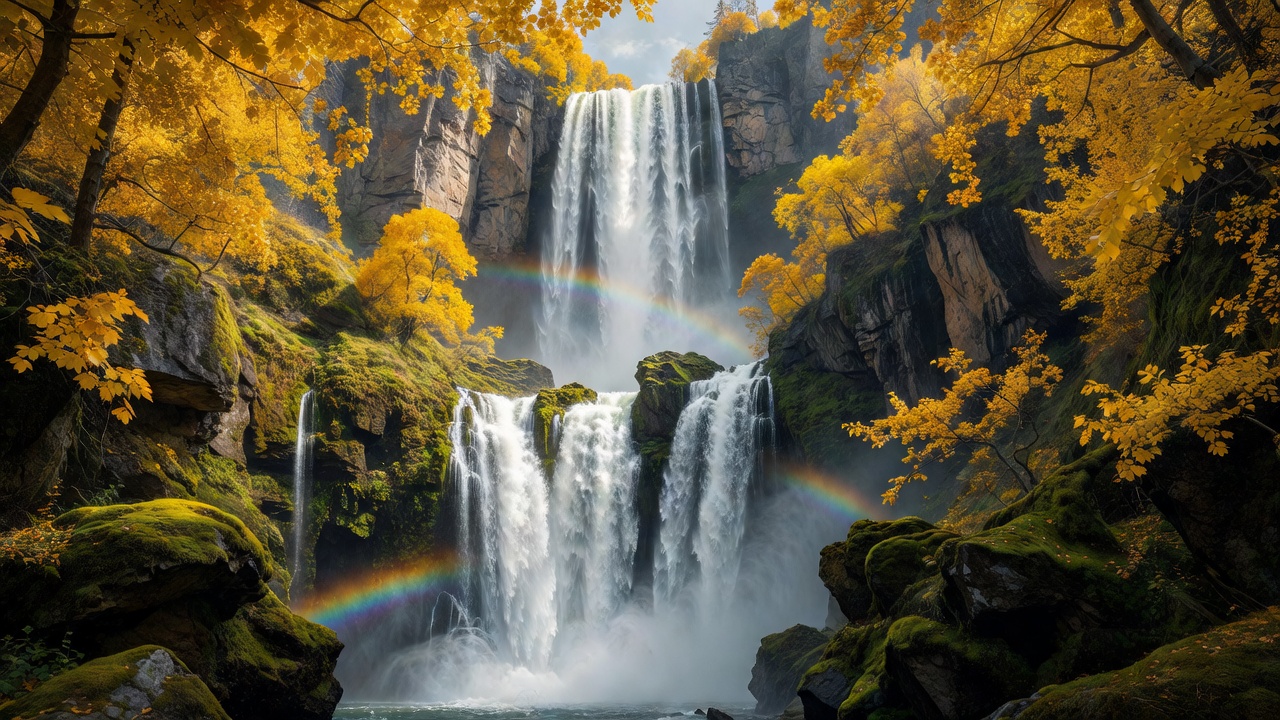
When people think of autumn foliage, the Pacific Northwest isn't usually the first region that comes to mind, as it is famous for its vast expanses of evergreen conifers. However, the Historic Columbia River Highway, which traces the sheer cliffs and plunging waterfalls of the Columbia River Gorge east of Portland, offers a dramatic and highly unique fall color experience.
Why It’s Famous for Autumn Foliage
The visual impact here is driven by contrast. Bigleaf maples, Oregon ash, and cottonwoods provide brilliant pops of yellow, gold, and bronze that stand out sharply against the deep, brooding greens of the Douglas firs and the dark, wet basalt cliffs. Furthermore, autumn is the beginning of the rainy season in Oregon, which means the dozens of waterfalls cascading down the sides of the gorge are heavily fueled and roaring. The sight of a towering waterfall plunging through a mist-shrouded, golden forest is profoundly atmospheric.
When to Visit
The lower elevations and milder climate of the gorge mean that autumn arrives here relatively late compared to mountain destinations. The best colors generally appear in late October and can sometimes hold on through the first week of November. Overcast, drizzly days are the norm, which actually serves to saturate the colors of the leaves and the mossy canyon walls, making for incredibly moody and striking photography.
Key Scenic Stops
- Crown Point and the Vista House: Serving as the gateway to the gorge, this historic observatory sits 733 feet above the river. It offers sweeping, unobstructed views down the canyon, allowing you to see the patchwork of gold and green flanking the massive waterway.
- Multnomah Falls: The crown jewel of the gorge waterfalls. Dropping over 600 feet, the falls are framed beautifully by bigleaf maples turning a vibrant yellow in late October. It is an essential stop, though highly trafficked.
- Latourell Falls: A short hike takes you to a single-plunge waterfall surrounded by columnar basalt formations that are frequently covered in bright, neon-green lichen, contrasting with the warm autumn leaves scattered around the base.
- Rowena Crest Viewpoint: Further east, the landscape transitions from dense temperate rainforest to arid grasslands. The famous horseshoe curve at Rowena Crest offers sweeping views where oak trees provide late-season color against the drier, golden hills.
Pros and Cons
Pros: Unbeatable combination of waterfalls, towering cliffs, and changing foliage; very close proximity to Portland (easy day trip); incredible historic highway engineering featuring moss-covered stone bridges and tunnels.
Cons: Extreme congestion. The western stretch of the gorge is incredibly popular, and parking lots for major waterfalls like Multnomah routinely fill up before 9:00 AM; the weather is frequently wet and grey, which isn't for everyone.
Driving Conditions and Practical Tips
You have two options for traversing the gorge: Interstate 84, which runs fast and low along the river, and the Historic Columbia River Highway (U.S. Route 30), which is a narrow, winding two-lane road carved into the cliffs. To see the foliage and waterfalls, you must take the historic highway.
Due to intense crowding, a timed-use permit system is sometimes implemented for the "Waterfall Corridor" during peak periods; always check the Oregon Department of Transportation website before planning your drive. Bring rain gear, sturdy boots with good traction for slick, muddy trails, and a microfiber cloth to keep your camera lens clear of the pervasive waterfall mist.