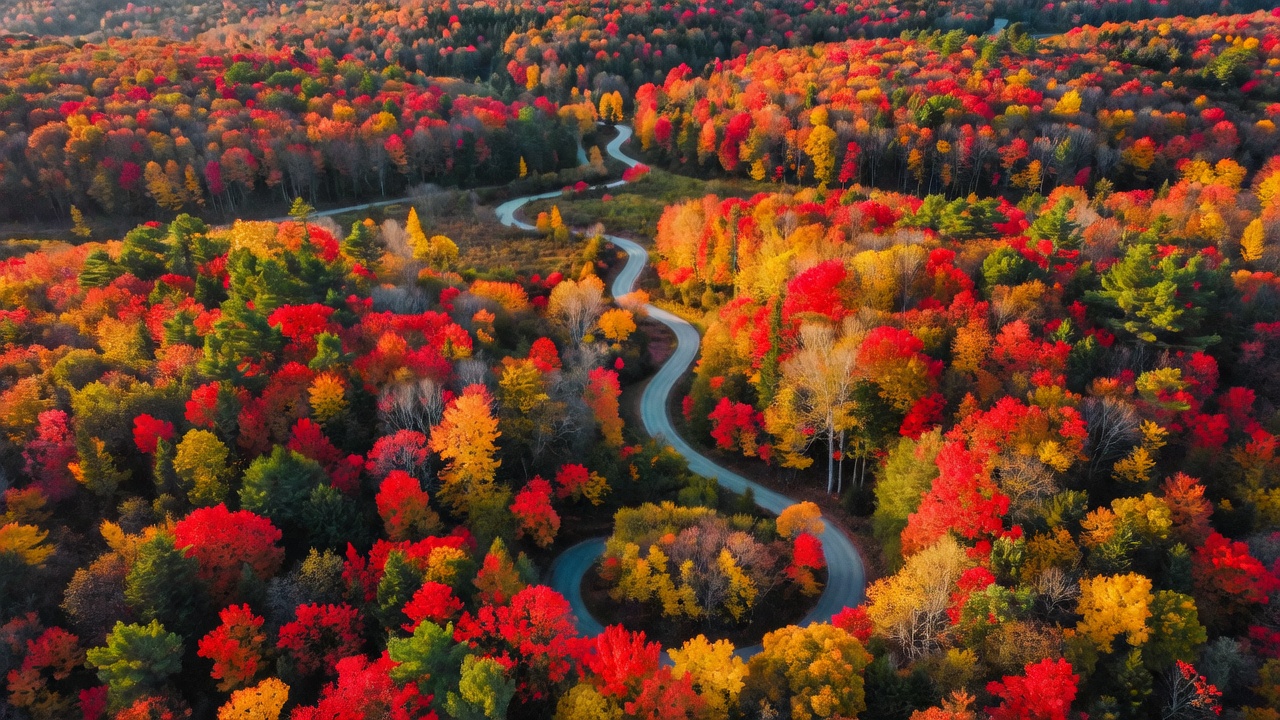
Known affectionately by locals simply as "The Kanc," this 34.5-mile stretch of Route 112 in northern New Hampshire is consistently ranked as one of the best fall foliage drives in the world. Slicing directly through the heart of the White Mountain National Forest, the Kancamagus Highway connects the towns of Lincoln and Conway, offering drivers a fully immersive dive into the quintessential New England autumn.
Why It’s Famous for Autumn Foliage
New Hampshire's climate and soil are perfectly suited for producing shockingly vivid autumn colors. The Kancamagus is dominated by sugar maples, American beech, and yellow birch. The sugar maples are the true stars of the show, erupting into neon oranges and fiery reds that contrast brilliantly against the dark greens of the intermixed spruce and fir trees. The lack of commercial development means there is nothing to distract from the vibrant natural canopy that completely envelops the two-lane road.
When to Visit
Timing a trip to the White Mountains requires precision. Because of its northern latitude and elevation, the Kancamagus typically reaches peak color earlier than points further south. The prime window is usually the first week of October. By Columbus Day / Indigenous Peoples' Day weekend, you are often looking at peak or slightly past-peak conditions, depending on late summer rainfall and early frost occurrences. If a harsh wind storm rolls through in mid-October, the trees can be stripped bare practically overnight.
Key Scenic Stops
- Hancock Overlook: A massive hairpin turn that climbs the side of the mountain, offering a sprawling view of the Osceola Range. This is a must-stop location, especially for sweeping panoramic photography.
- Pemigewasset Overlook: Situated near the highest elevation of the highway (nearly 3,000 feet), this pull-off looks out over the Pemigewasset Wilderness. It is famous for spectacular sunsets that light the changing leaves ablaze.
- Sabbaday Falls: A short, accessible walk from the road takes you to a picturesque, multi-tiered waterfall cutting through a narrow gorge. The contrast of the rushing water against the fallen yellow leaves is incredibly photogenic.
- Rocky Gorge Scenic Area: Here, the Swift River narrows and forces its way through a jagged gorge. A rustic footbridge crosses the river, providing excellent elevated views of the water and the surrounding autumn forest.
Pros and Cons
Pros: Pure, unadulterated nature with zero commercial development (no gas stations, hotels, or restaurants for the entire stretch); dense, vibrant maple forests; well-marked pull-offs and trailheads.
Cons: Intense crowding. On peak weekends in October, traffic can slow to a crawl, and parking at the major overlooks will be highly competitive. Facilities are limited to basic Forest Service outhouses.
Driving Conditions and Practical Tips
The road is fully paved and well-maintained but contains many sharp curves and substantial elevation changes. The pass reaches 2,855 feet, which means you could encounter frost or even early flurries in October. Keep your eyes peeled for moose, especially at dawn and dusk, as they frequently cross the roadway and pose a significant hazard to drivers.
Because it is a designated scenic byway traversing a National Forest, there are strictly no services. You must enter the Kanc with a full tank of gas from either Lincoln or Conway. Furthermore, you will need a recreation pass (a small daily fee) if you plan to park your car and step away at any of the major trailheads or facilities; these can be purchased at self-serve kiosks along the route.